Showing posts with label how to potty train a dog in 7 days. Show all posts

Puppy Potty Training - Things Anyone Who Wants to Potty Train A Puppy Should Know

things anyone who wants to potty train a puppy should know

Congratulations on the new addition to your home! You may have doubts about whether you really want this new change because you have problems with your puppy training. First, I want to make sure that this problem is temporary and that there is a permanent solution, believe it or not. As with toilet training, a child does not last forever, but it does not take a day or sometimes a week. Cleaning a puppy can be learned with concentration and understanding appropriate to the child. Theme.

Potty training for puppies

When it comes to "bringing a puppy to the bathroom", choosing the right method is one of the keys to a potentially successful potty training exercise for puppies. The three most common methods are: the direct training method, the paper training method and the cage training method. The Welpentrainingsmethode for puppies is particularly suitable for people who have plenty of time to observe the exercise. In contrast, the drawer training method prefers homeowners who usually spend three or four hours or more outside the home (eg busy homeowners and working mothers). from the house). After all, the method of learning to clean is useful if you live in a high-rise apartment or if you have a small budget to achieve the desired goal.

Choose a Puppy Potty training method

Your choice of puppy training method you should apply should be based on a good understanding of the various methods and their requirements, your lifestyle, the understanding and appreciation for "bladder development and development" of a pup blanket), a good understanding of the relevant natural ones Instincts with which a puppy was born, and finally, how much time and budget is ready to achieve this goal.

Relevant data for the development of the bladder and intestine of a puppy


  • A puppy develops complete sensitivity to the bladder and bowel, such as an adult dog that is about 6 weeks old, but conscious control of his bladder and bowel movements is not possible at this time.
  • They develop the total ability to control the movements of their intestines and bladder at the age of 16 to 24 weeks.
  • Puppies of smaller breeds and toys have a smaller bladder, but a faster metabolic rate (therefore it may be necessary to urinate more often).


Tips for Training the Puppy Pot Regardless of the potty training method used, the following tips are critical to achieving your goal.

  • The best time to start raising your puppy is between 8 and 8.5 weeks.
  • Involve everyone at home and make sure everyone understands which goal they want to reach, so as not to confuse the puppy.
  • Take your puppy to a designated evacuation area. 10 to 15 minutes in the first hour of the morning, immediately after a nap, 10 minutes before and after a meal, immediately after playing (especially indoors) and 10 to 15 minutes in the evening.
  • When choosing a puppy training method, avoid using the cage training method when the puppy in the cage they want to use is feeling anxious, agitated, threatened, and unwell.
  • If your puppy is in a certain place to empty and act, pronounce a "gentle praise," not overly enthusiastic praise. Just do it later, when your puppy is done. These actions will reaffirm your approval of the actions and also help boost your puppy's confidence!
  • Never miss the opportunity to compliment your puppy (with a nice tone) when it's empty at the right time in the right place. It is very important!
  • Do you have a good bath mat in the house when accidents happen because they will happen!
  • If your puppy is caught in an unrecognized area while emptying, express your refusal by saying "No or Bad Dog" with a low tone, pick it up immediately and carry it to the designated area. Never punish the puppy!
  • Immediately and always clean (the designated area is empty) after your dog. This is a good practice and helps to protect your puppy and the public, especially children, from infestation with worms.
  • Never stop training your puppy until you are 150% sure that everything is alright.
  • Never give your puppy his whole house before he's trained for the toilet!
  • Familiarize yourself with the model / evacuation mark of your puppy show and place it in the designated empty area as soon as it begins to show one of the signs.
A successful and sustainable training exercise for puppies does not take place overnight, but is only possible in 3 to 6 weeks, and in some cases in a much shorter time, when you are ready. necessary work.

These are some of the most important things to learn potty training your dog. If you want to train your dog successfully, you must always be patient and persistent.


References:
https://getfreedogtraining.com/puppy-potty-training-90-of-pet-owners-make-these-mistakes/
https://www.freedogtrainingclasses.com/successful-dog-potty-training/

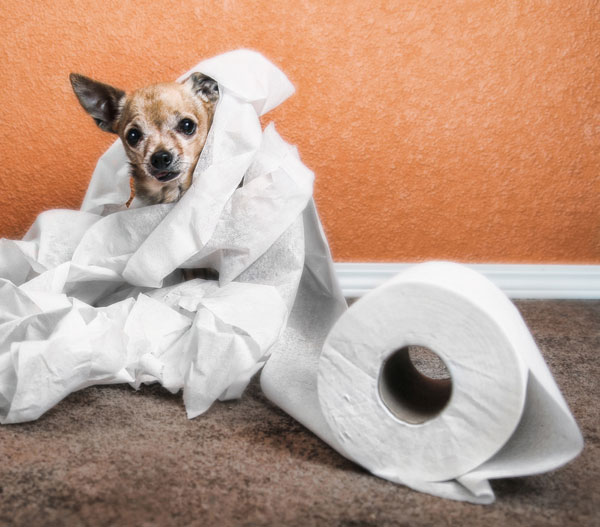
How to Toilet Train a Puppy - Preventing Unacceptable Urination or Defecation

preventing unacceptable urination or defecation

The question of how to bring a puppy to the toilet is widespread. Did you know that of all behavioral problems in dogs up to 20% have to do with urinating and defecating at unacceptable times and in unacceptable locations?

First, you must understand that your puppy can not learn to control its impulses before the age of 9 weeks. Although some dogs learn quickly, it can be difficult to raise a puppy before that age.

Causes of elimination problems


If you plan to bring a puppy to the bathroom, you need to consider a few things that can complicate the process as it should be. Even with a puppy who has already completed a workout and starts to do things again, it is very important to determine the factors that caused this behavior and could have interrupted the training.

Medical problems


Your dog may lose control due to medical problems. Cystitis, stones, cognitive disorders, diabetes, gastroenteritis, parasites or Cushing's disease can be the main cause of the problem. If your dog seems to be ill, consult a veterinarian immediately.

Territorial behavior


Your dog may want to mark his territory or show his territory at home. Although castration is believed to alleviate this problem, it may not be the ideal solution, as 40% of castrated dogs with urinary problems still suffer from it.

In terms of behavior in the field, the solution would be to assert yourself at home as the leader of the pack. There is no doubt that you are the alpha leader. In addition, you must clean your house thoroughly from the above locations. It should be used a very good odor neutralizer especially for dogs. It not only works to not smell the smell of the human nose, because the nose of a dog is much more sensitive.

Urination and submission


Some dogs may have the opposite problem and urinate as a sign of submission. It can happen when you greet people. It is usually a puppy trait that can sometimes be brought to adulthood.

Separation anxiety


If you notice that your puppy is causing harm when you are away from home. This may indicate that you are feeling lonely and worried. It's not necessarily because he can not stand. This is especially true if you have not left for a long time. Other clues are how the dog follows you at home or behaves when you fall asleep or how you behave when you return home.

Avoid or stop disposal problems


To get a puppy to the toilet, you must first exclude all medical problems. If your behavior indicates a medical problem, talk to a veterinarian and make sure everything is OK before proceeding. However, if this is not the problem, there are other things to do. These are listed below.

Normal schedule


A predictable routine is a necessity. If your puppy has a regular and specific schedule for eating and exercising, he adapts to the hours and areas he is trained to dispose of.

Offer opportunities


If the house drives your puppy, it is not appropriate to take it out once or twice a day. During exercise, you must remove it at least 5 times a day until you understand it is designed to eliminate the outside. This also gives you an idea of ​​your needs.

Limit or train your puppy in a cage


If these methods do not work well and you do not need to be home, limit your puppy to a small area so that it does not get dirty everywhere. Remember to train your puppy. Alternatively, a small room or a closed room would be suitable.

Endurance


Training your puppy can be a daunting task. Must be persistent and give your puppy enough time to adapt. If you stop your one-day exercise process to take a break, it can confuse and delay your dog's learning.

These are some of the most important things to learn how to toilet training a puppy. If you want to train your dog successfully, you must always be patient and persistent.


References:
https://www.freedogtrainingclasses.com/how-to-toilet-train-your-puppy-in-7-days/
https://getfreedogtraining.com/7-quick-tips-for-toilet-training-a-dog-or-puppy/

How To Potty Train Your Puppy

how to potty train your puppy

He has just brought home a new happy, sweet and sweet puppy whose whole family is in love. However, the puppy faces many setbacks and eventually left you with an unwanted gift on your favorite carpet in the middle of the night.

It is important that you get a new training for puppies before or when you bring a puppy home for the first time. Learning how to go home is not too difficult, and you'll find it easy to follow a range of ideas.

If you follow all instructions to train your puppy carefully, you can complete the training in about 2 weeks. If your pet still has an accident after four months, contact your veterinarian immediately.

If you want to learn how to potty train your puppy, you need to be patient and persistent. Putting a puppy on is like teaching a child something new. That's why you have to be nice, but strong. You should also remember that young and adult dogs do not have the same resistance. As a result, they will not be able to handle their bladder very well. As with children, it's too late as soon as they realize they need to go to the bathroom. Therefore, you should look for training strategies for puppies that you can use to train them so that they know when and where they need to go to the bathroom.

Here are some recommendations for the following puppy training:


* You should not "train" your puppy if you teach him to go to the bathroom. This only increases your workload as you have to restart the process when the puppy is preparing outside the home.

* Other family members should be aware of the puppy's training process. You will not be at home all the time; Therefore, you need other family members to help you with the training of your puppy.

* When you train puppies, you must follow a routine. Your puppy should get up and go to bed at the same time every day.

* It is imperative to check the habits of your puppy when you go to the bathroom. This will help you to familiarize yourself with the different signs while he is at home.

One of the first obstacles to becoming a new puppy owner is to learn how to get him to the toilet. This ability will reconcile you with your new and charming family member and save you a lot of frustration. In fact, it is much easier to teach a puppy how to use the toilet than to educate a child. A puppy is quite predictable when to empty his bowel or bladder. When you learn to predict that you are ready to "go," you can show them where the most acceptable place is.

It is quite common for a puppy to empty his bladder when he wakes up after a nap. Puppies tend to sleep a lot because their bodies are growing all the time, just like human babies. With this knowledge, it is recommended to take out your puppy immediately after waking up or to write a diary. He will teach you that these are acceptable places where he can empty his bladder.

Another predictable time when young puppies empty their bladders is immediately after the hard game. When you're done hunting for a bullet or consume a lot of energy, it's time to take it out or publish it in the paper. It is also predictable that a puppy will "go" immediately after eating. Feed her once in the morning and once in the afternoon. Take them out after lunch or put them in the papers, and they'll soon find out that they should go to the bathroom here.

Puppies and dogs can understand body language and signs. When you put your dog outside or in the newspaper, it's a sign that he understands and responds. While you should be careful when you should be predictable, you should train it without too much trouble.

These are some of the most important things to learn how to potty training your puppy. If you want to train your dog successfully, you must always be patient and persistent.


References:
https://www.freedogtrainingclasses.com/how-to-potty-train-your-puppy-a-comprehensive-guide-to-finding-success/
https://getfreedogtraining.com/puppy-potty-training-90-of-pet-owners-make-these-mistakes/